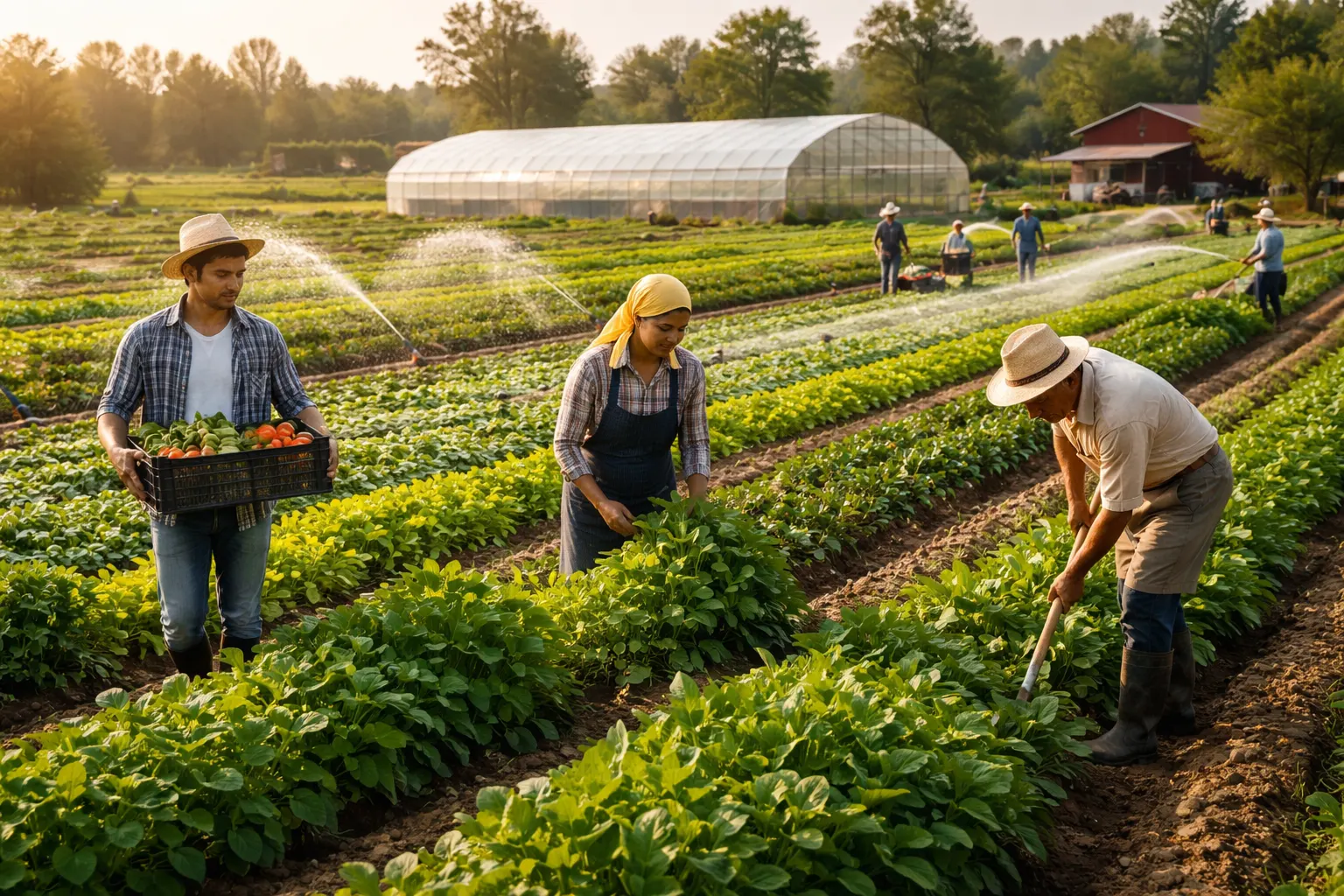
Rural employment has always been closely tied to agriculture. In many regions, farming remains the primary source of income for households. However, traditional farming models often struggle to provide stable, year-round work. Income fluctuates with seasons, weather, and market prices.
This is where managed farmland plays a transformative role. By bringing structure, professional planning, and long-term operational strategies into agriculture, managed systems create more reliable employment opportunities. Instead of seasonal labor cycles, rural communities begin to experience more consistent economic activity.
In growing agricultural hubs such as managed farmland near Bangalore, structured farm operations are already demonstrating how professional land management can generate stable rural employment while improving productivity.
Rural Employment Gap That Needs Solving
Rural employment often suffers from instability. Work opportunities increase during planting and harvesting seasons but decline sharply during off-season periods. This creates underemployment and financial uncertainty for farm workers.
Many rural households depend on small landholdings that do not generate sufficient income. As a result, younger generations migrate to cities in search of stable wages. The absence of structured agricultural systems makes rural economies vulnerable and inconsistent.
Managed farmland addresses these weaknesses by creating a more organized and continuous demand for labor.
How Managed Farmland Creates Direct Employment
One of the strongest contributions of managed farmland is direct job creation. These farms require a dedicated workforce throughout the cultivation cycle, not just during peak seasons.
Because operations are planned carefully, there is demand for supervisors, irrigation managers, machine operators, quality inspectors, and trained field workers. This structured approach increases job stability.
In managed organic farmland, labor demand can be even higher. Organic cultivation often involves manual monitoring, natural pest control preparation, and soil care practices. These activities create consistent work across the year rather than short bursts of employment.
Year-Round Work Instead of Seasonal Income
Traditional farms typically operate around a single crop cycle. Managed agriculture farmland, on the other hand, often uses crop rotation, multi-cropping, greenhouse farming, or integrated livestock systems.
This diversified model ensures that work continues across different agricultural phases. When one crop is harvested, another is planted or maintained. As a result, labor demand becomes more balanced throughout the year.
Stable employment reduces financial stress and improves long-term planning for rural families.
Skill Development and Workforce Upgrading
Managed farmland does not just create jobs. It improves the quality of jobs. Workers are exposed to modern irrigation systems, soil health management, precision farming tools, and improved harvesting techniques.
Over time, this hands-on learning increases skill levels. Skilled agricultural workers are more productive and can command better wages.
In managed organic farmland systems, workers also gain knowledge about organic certification standards, sustainable cultivation practices, and traceability processes. This adds professional value to rural labor.
Indirect Employment Through Agricultural Value Chains
The impact of managed farmland extends beyond the field. Once production becomes structured and market-driven, additional employment opportunities emerge in related sectors.
Processing, packaging, sorting, labeling, transportation, and storage services all expand alongside organized farming systems. This creates non-field jobs that support rural economies.
Managed agriculture farmland strengthens the entire value chain. Instead of raw produce leaving villages immediately, local processing activities generate additional employment and income.
Encouraging Youth Participation in Managed Farmland
Many young people leave rural areas because traditional farming appears unstable and outdated. Managed farmland changes this perception by introducing technology and structured operations.
When agriculture becomes organized and business-oriented, it attracts educated rural youth. Roles in farm management, data monitoring, supply coordination, and operational planning become available.
This modern approach helps retain young talent within rural communities and reduces forced migration.
Supporting Women in Rural Employment
Managed farmland systems often create structured and transparent work environments. This improves participation opportunities for women in agricultural activities.
Women frequently engage in nursery management, sorting and grading operations, organic input preparation, and livestock care. Organized farm management can provide clearer wage systems and safer working conditions.
Greater female participation strengthens household income stability and community development.
Economic Multiplier Effect on Rural Communities
When managed farmland generates steady wages, the benefits extend beyond individual workers. Increased income leads to higher spending within local markets.
Small businesses, retail shops, transport services, and educational institutions all benefit from stronger purchasing power. Rural economic activity becomes more dynamic and self-sustaining.
Managed agriculture farmland also improves access to financing, as structured operations are more attractive to banks and investors. This further stimulates rural growth.
Reducing Rural-Urban Migration
Income instability is one of the main drivers of rural migration. When managed farmland creates predictable employment and skill-based roles, workers are less likely to leave their communities out of necessity.
Stable agricultural employment keeps families together and strengthens local economies. Over time, villages become economically resilient rather than dependent on remittances from urban migration.
The Importance of Responsible Management
For managed farmland to truly support rural employment, it must operate responsibly. Fair wages, inclusive participation, and environmental sustainability are essential.
Managed organic farmland, in particular, must balance productivity with long-term soil and water health. Sustainable management ensures that employment benefits continue for future generations.
When structured correctly, managed agriculture farmland becomes both an economic engine and a social stabilizer.
Managed farmland is more than a method of cultivation. It is a structured economic model that strengthens rural employment systems.
By creating year-round work, upgrading skills, expanding value chains, and reducing migration pressure, managed agriculture farmland supports long-term rural stability. Managed organic farmland further enhances this model through sustainable practices and premium market opportunities.
When thoughtfully implemented, managed farmland transforms agriculture from seasonal survival work into a reliable and growth-oriented employment sector.